
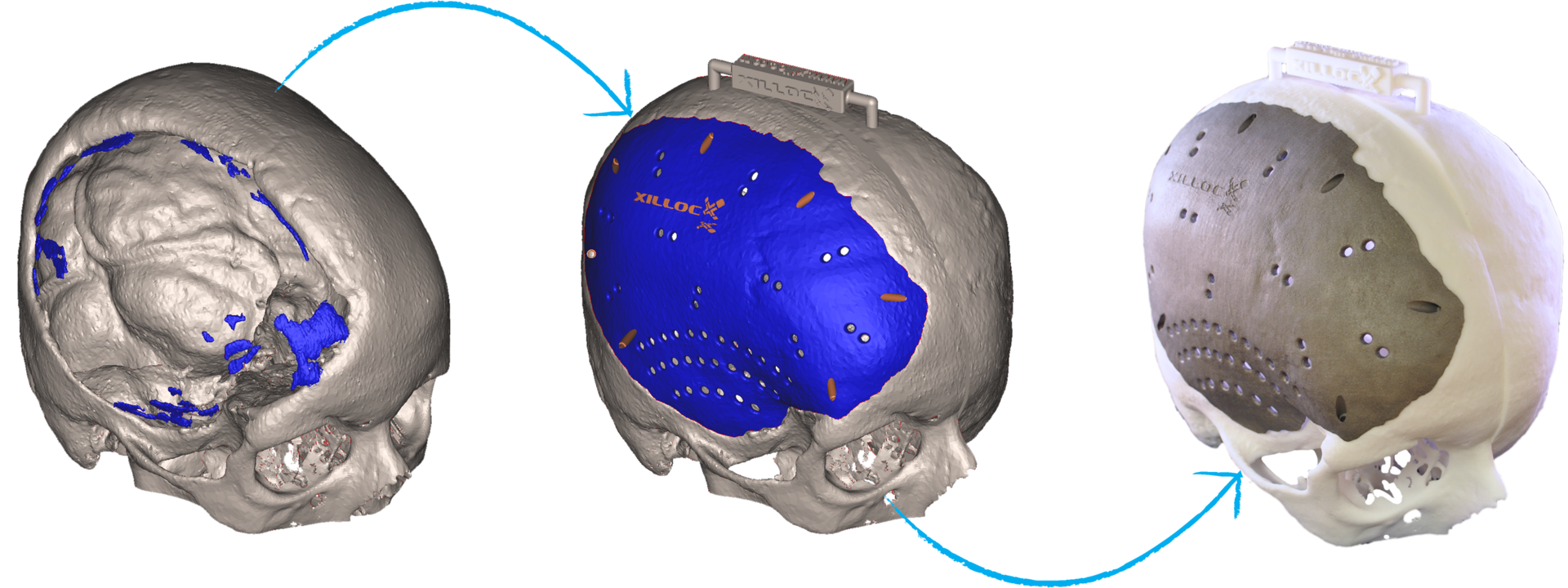
A materials paper may describe a new coating, polymer film or scaffold as biocompatible. The word sounds like a single property that could be measured once and printed on a label. In practice, its meaning depends on the material’s form, the biological setting, the intended use and the evidence collected.
A useful reading question is therefore: compatible with what, for which purpose, and under which conditions? Answering those questions turns a broad adjective into an assessable research claim.
Separate the material from its intended role
Biomaterials are materials used to interact with biological systems for a purpose. They can include metals, ceramics, polymers and materials derived from biological sources. The category describes an application, not a guarantee that every version of a substance will behave acceptably in every setting.
The NIBIB introduction to biomaterial technologies illustrates the breadth of the field, from structural components to coatings and tissue-engineering frameworks. Those applications ask different things of a material. A load-bearing component and a transparent optical component cannot be judged by one shared performance number.
For a paper reader, begin by writing the proposed role in ordinary language. Is the material meant to carry load, form a temporary barrier, support cells or provide a surface coating? This sentence will help determine whether the reported tests address the proposal.
Contact conditions change the question
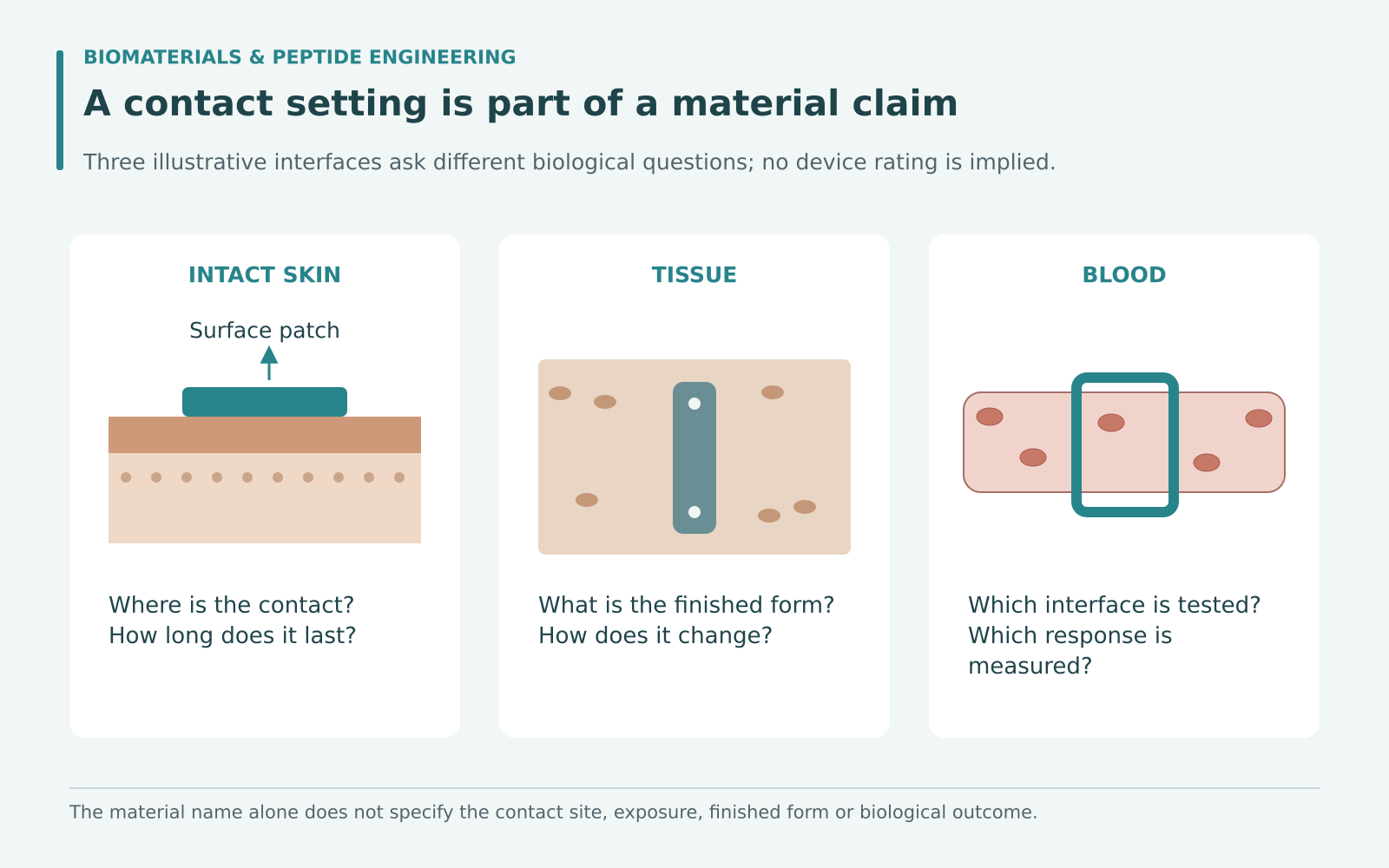
A material touching intact skin briefly creates a different research question from one placed in tissue for a long period. Contact with blood presents another setting. The same chemical name does not erase differences in location, duration or exposure.
The FDA’s biocompatibility assessment overview identifies the nature, type, frequency and duration of contact as relevant considerations. It also emphasizes evaluation of a device in its finished form, including relevant manufacturing and sterilization processes.
This provides a practical distinction for interpreting a research abstract: evidence about a raw ingredient is not automatically evidence about a finished device. Processing, coatings, residues and interactions among components may change the object being evaluated.
A cell-viability result answers a limited question
Suppose an invented study reports that cultured cells remained viable after exposure to a material extract for a specified time. That can be a useful finding. It describes the tested cells, exposure conditions, assay and comparison.
It does not, by itself, establish every biological response that might occur during long-term implantation. The gap is not a criticism of the experiment. It is a difference between the experiment’s question and a much broader proposed conclusion.
A precise summary might say, “The extract did not reduce the measured viability outcome under these conditions.” Replacing that with “The material is safe in the body” removes the information needed to judge the result.
Keep biological response and engineering performance distinct
A material can perform well mechanically while leaving biological questions unanswered. It can also support cells in a laboratory assay while being too weak, too opaque or too unstable for its intended engineering role.
| Reported observation | Question addressed | Separate question still worth asking |
|---|---|---|
| A tensile measurement | How did the sample resist the specified loading? | What biological contact was evaluated? |
| A cell-viability assay | What happened to the measured cellular outcome? | Does the material meet its mechanical purpose? |
| A degradation measurement | How did the sample change over time? | What are the consequences of those changes? |
The table encourages complementary questions. It does not rank one test as universally more important than another. The intended application determines which combination of evidence is informative.
Examine what the comparison actually holds constant
Imagine two fictional scaffolds. One is more porous and also has a different surface chemistry. If cells spread differently on them, the result alone does not identify which of those differences caused the response.
A stronger comparison might isolate one design variable while characterizing others. When that is not possible, the discussion should preserve the combined nature of the change. Calling the entire improvement an effect of one peptide coating would require evidence that separates the coating from the other differences.
For a reader’s notebook, list the changed variable beside the comparison group. Then record any additional properties that changed. This simple exercise often reveals whether a proposed mechanism is directly tested or remains an interpretation.
Read natural and synthetic as origins, not verdicts
Natural, biological and synthetic describe aspects of a material’s origin or preparation. They do not supply a complete account of its interaction with a particular tissue. A biologically derived material still has a composition, processing history and intended exposure.
Similarly, an engineered polymer should be assessed through its actual properties and evidence rather than through an assumption that artificial materials all behave alike. The useful comparison is between defined samples under relevant conditions.
This becomes especially important with peptide-containing materials. A peptide may serve as a structural component, a cell-interaction motif or an enzyme-cleavable connection. Its role in the design needs to be stated before a biological outcome is attributed to it.
Write a one-paragraph evidence summary
A clear summary can contain four elements: the material in its tested form, the intended use, the observed outcome and the main limit of the experiment. For example, a fictional report could describe a polymer film, a proposed temporary barrier, an extract-based cell assay and the fact that long-term tissue response was not studied.
That paragraph is more useful than a checklist of reassuring adjectives. It tells another reader what is known and what question remains open. It also makes comparisons between papers easier because the same information is attached to each claim.
Keep the observation period visible. A photograph at one time point cannot show the full sequence of later changes. If a paper follows samples over time, distinguish the initial response from the final observation rather than describing both as a single permanent property.
Connect the claim to the design problem
Biocompatibility becomes meaningful when the biological response fits a defined purpose. A temporary scaffold may need to change as cells remodel their surroundings; another component may need to maintain its structure. The appropriate behaviour depends on the job.
When reading a new materials paper, keep asking what the design is meant to accomplish and which observations support that aim. The word biocompatible can introduce the discussion, but the material, conditions and measured responses must carry the explanation.